CONDITION 01
Badly chipped, very dull
A knife in very poor cutting condition
Watch what happens to the tomato before the blade enters. A dull knife tends to push and deform the tomato first. A sharper edge begins cutting with less visible pushing. These real photos and videos compare four conditions.
From left to right, the examples move from poorer cutting condition toward better cutting condition. The main thing to watch is how much the tomato is pushed before the blade enters — not how thin the final slice is.
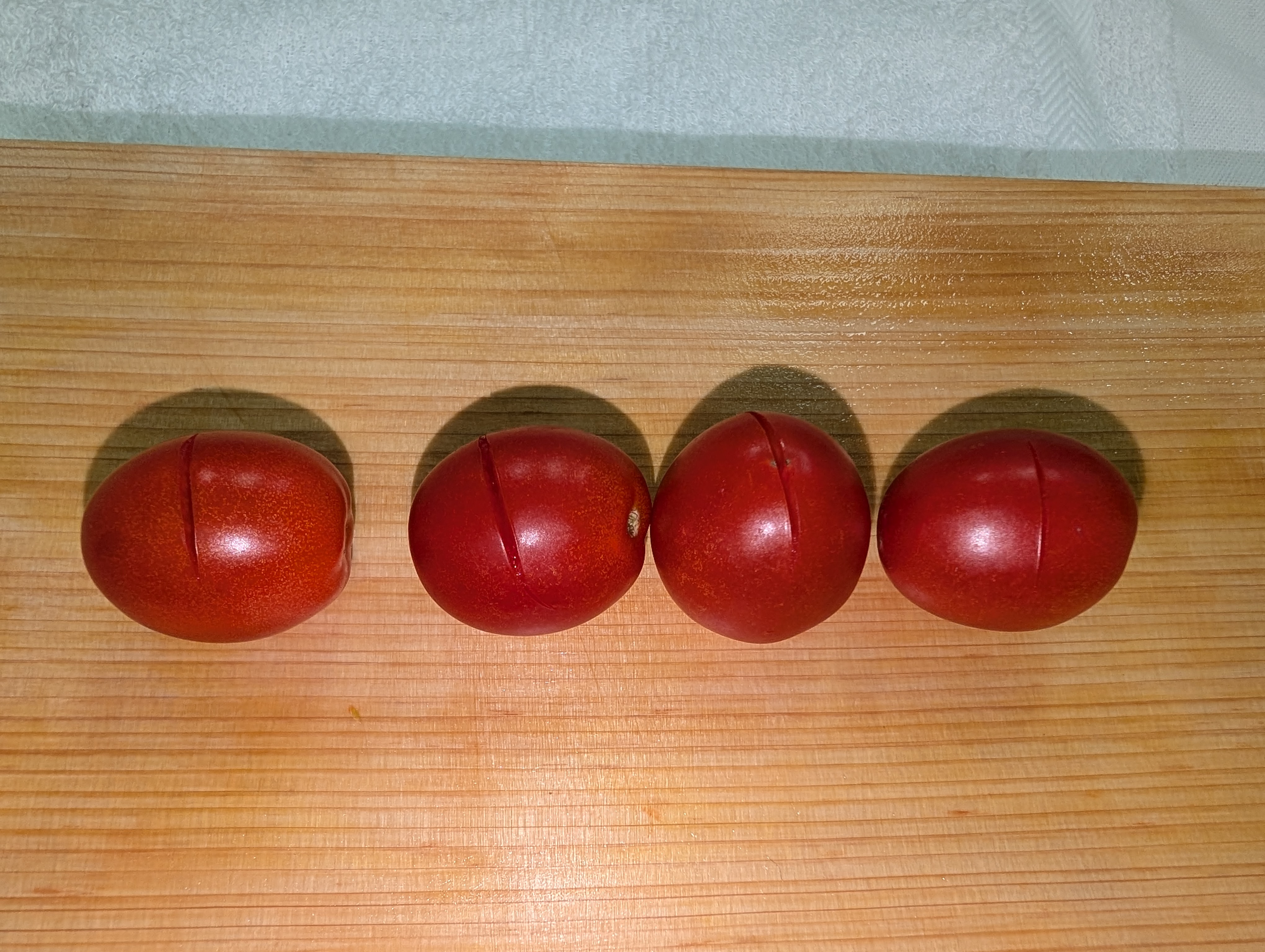
A knife in very poor cutting condition
A typical image of a household knife used for a long time without sharpening
A new Masahiro knife, used as purchased without our full sharpening
Our full sharpening / final edge finishing
The difference is easier to see in motion. Start watching as soon as the blade touches the tomato, then compare the visible pushing and deformation before the skin is cut.
A knife in very poor cutting condition
Watch for: Watch how much the tomato is pushed down before the blade begins to enter.
A typical image of a household knife used for a long time without sharpening
Watch for: Compare the visible deformation before the skin finally gives way.
A new Masahiro knife, used as purchased without our full sharpening
Watch for: In this comparison, less pushing is visible before the blade starts to enter.
Our full sharpening / final edge finishing
Watch for: In this comparison, the blade begins to enter with very little visible pushing.
Each video can be played separately. Use 0.5× playback if you want to compare the moment of entry more closely.
In this comparison, the poorer-cutting examples show more visible pushing before the blade begins to enter the tomato.
As cutting condition improves, the blade begins to enter with less visible deformation of the tomato.
Tomato firmness and ripeness, knife geometry, cutting technique and other conditions can change the result. This is a visual comparison, not a standardized sharpness measurement.
Sharpness is not only about whether a knife can eventually cut. A better edge can reduce the need to push, help you start the cut where you intend, and make delicate ingredients easier to handle.
The blade can begin cutting without relying on as much downward force.
Soft foods such as tomatoes are easier to cut without unnecessary deformation and juice loss.
A clean entry makes precise cuts and thin slicing easier to manage.
Condition 03 is a new Masahiro knife used as purchased, without our full sharpening. Condition 04 shows a knife after our full sharpening and final edge finishing.
In this comparison, the fully sharpened knife entered the tomato with less visible pushing than the new knife tested.
This does not claim that every sharpened knife is sharper than every new knife. It describes the knives and conditions shown in this comparison.
Edge performance usually declines gradually. When you use the same knife every day, that change can be difficult to notice until you are already compensating with more pressure.
This is a household observation cue, not a numerical or standardized sharpness test.
If those changes are becoming obvious, it may be time to have the edge assessed or sharpened.
Sharpening is part of ownership, not a sign that a good knife has failed. If the knife matters to you, keeping the geometry and edge in good condition helps keep it in daily use.
Japan Blade Sharpening accepts assessment requests for Japanese kitchen knives, including knives bought from other makers and shops. International customers should contact us before shipping anything to Japan.
Start with information and photos. We can review the knife and tell you whether the request is suitable for further assessment before you arrange international shipping.